

SCoPE2-MS for single cell proteomics sample preparation using cellenONE
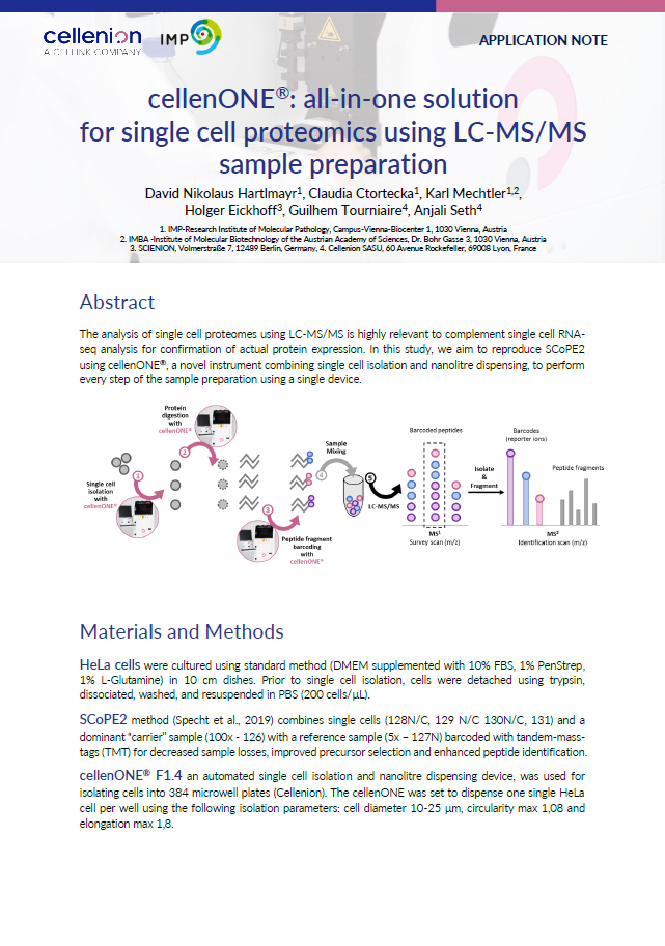
AppNote 13 – IMP Vienna – SCoPE2-MS for single cell proteomics sample preparation using cellenONE
Rarecyte – Accurate and precise spike-in method for CTC validation studies with cellenONE®
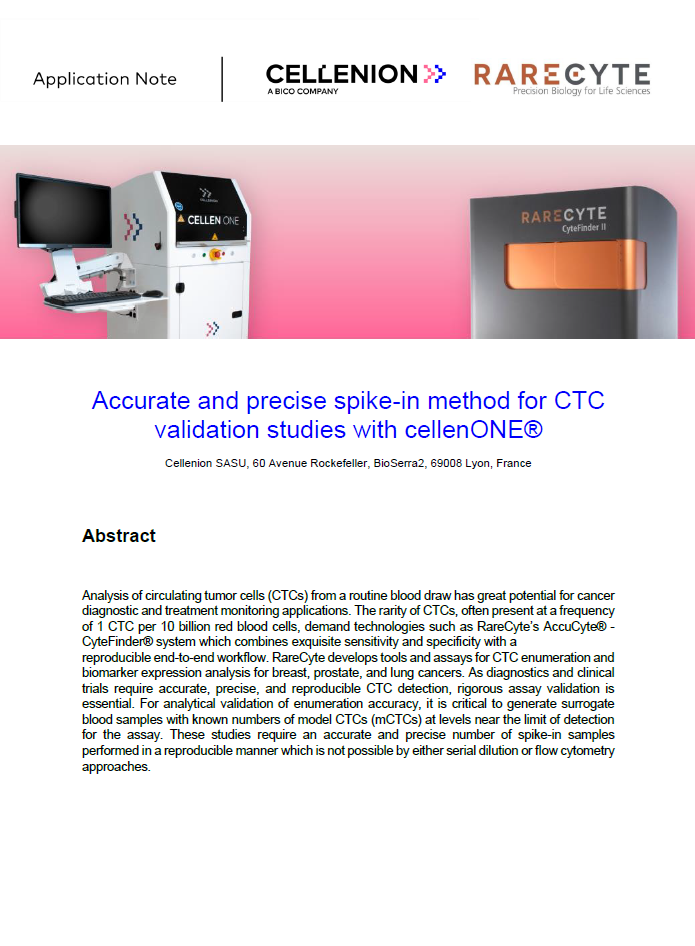
AppNote 11 – Rarecyte – Accurate and precise spike-in method for CTC validation studies with cellenONE®
cellenONE sterile condition operation
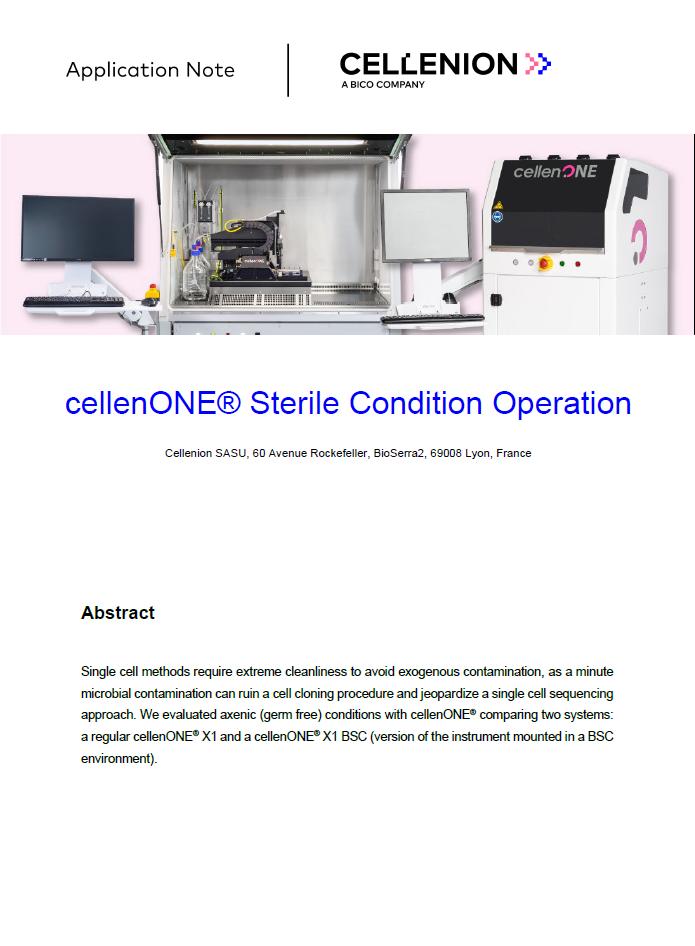
AppNote 06 – cellenONE sterile condition operation
DLP+: Scaling Whole-Genome Sequencing to 50,000 single cells using cellenONE
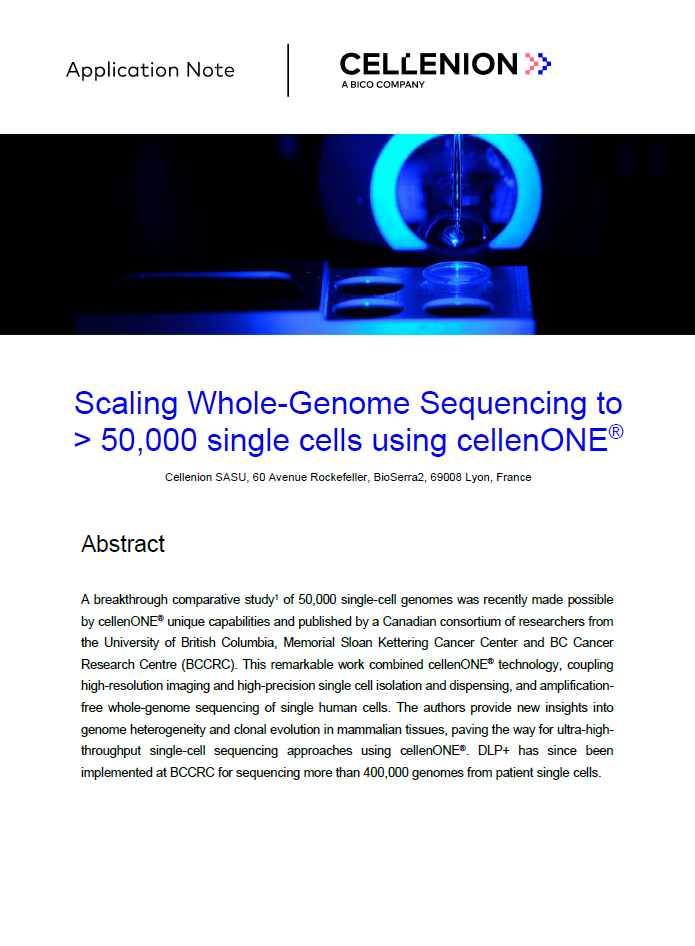
AppNote 05 – University of British Columbia (DLPplus method) – Scaling Whole-Genome Sequencing to 50,000 single cells using cellenONE
Unparalleled clonal outgrowth achieved in 96-,384- and-1536- microtiter plates
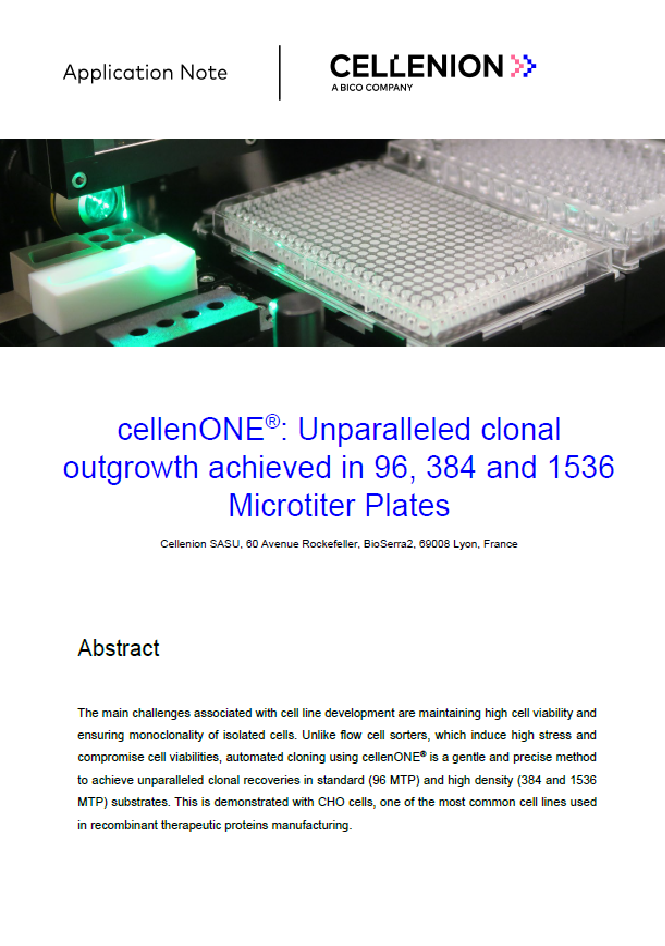
AppNote 03 – Unparalleled clonal outgrowth achieved in 96-,384- and-1536- microtiter plates
MACSQuant TYTO and cellenONE for development of monoclonal cell lines
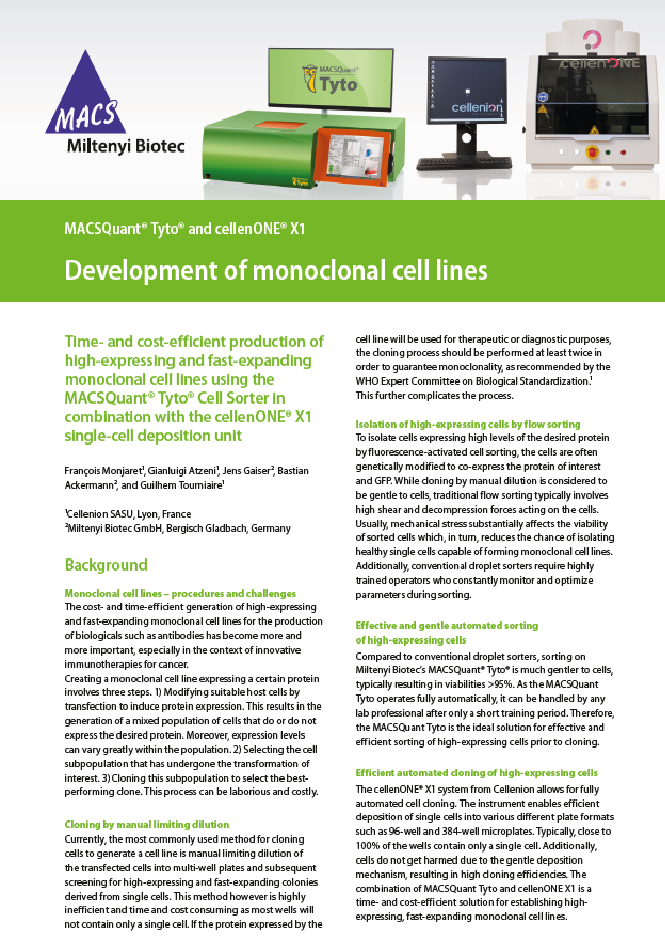
AppNote 01bis – MACSQuant TYTO and cellenONE for development of monoclonal cell lines
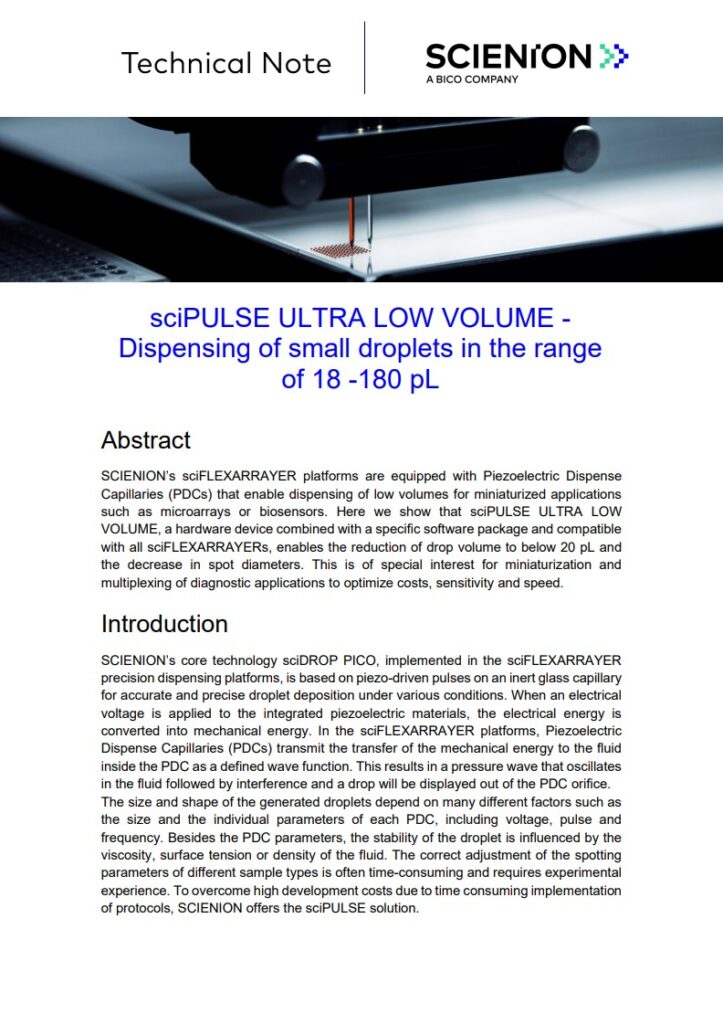
sciPULSE ULTRA LOW VOLUME – Dispensing of small droplets in the range of 18 – 180 pL
FACS OFF! Autonomous and high-throughput Single Cell Cloning
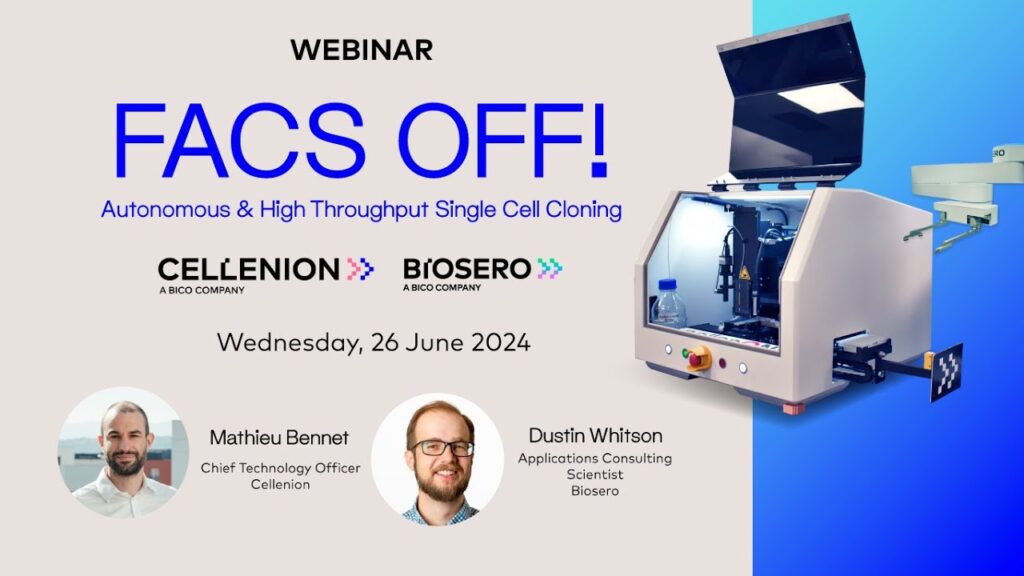
B-cell cloning is an industry standard method for reliable and reproducible production of monoclonal antibodies (mAb). A typical journey in mAb development involves B cells isolation prior to screening. For years, FACS has been the method of choice for semi-automated seeding of single cells into microwell plates. However, this method suffers from low throughput due […]
NextGen Omics UK 2022 – Recorded Presentation

Our former CSO presented in 2022 how cellenONE and its accessories can be used in single cell omics, from single cell genomics and transcriptomics, to single cell proteomics and multiomics.
Cellenion product overview
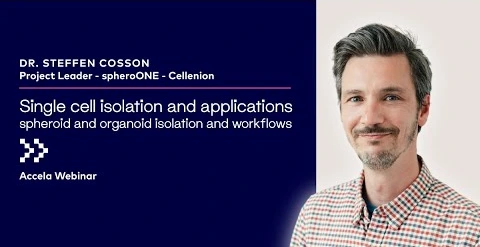
In this Webinar performed in collaboration with Accela, our Scientist Steffen Cosson gave an overview of our products and technology, from cellenONE for single cell isolation and single cell omics sample preparation, to its younger sibling spheroONE, for the sorting and isolation of spheroids and organoids.