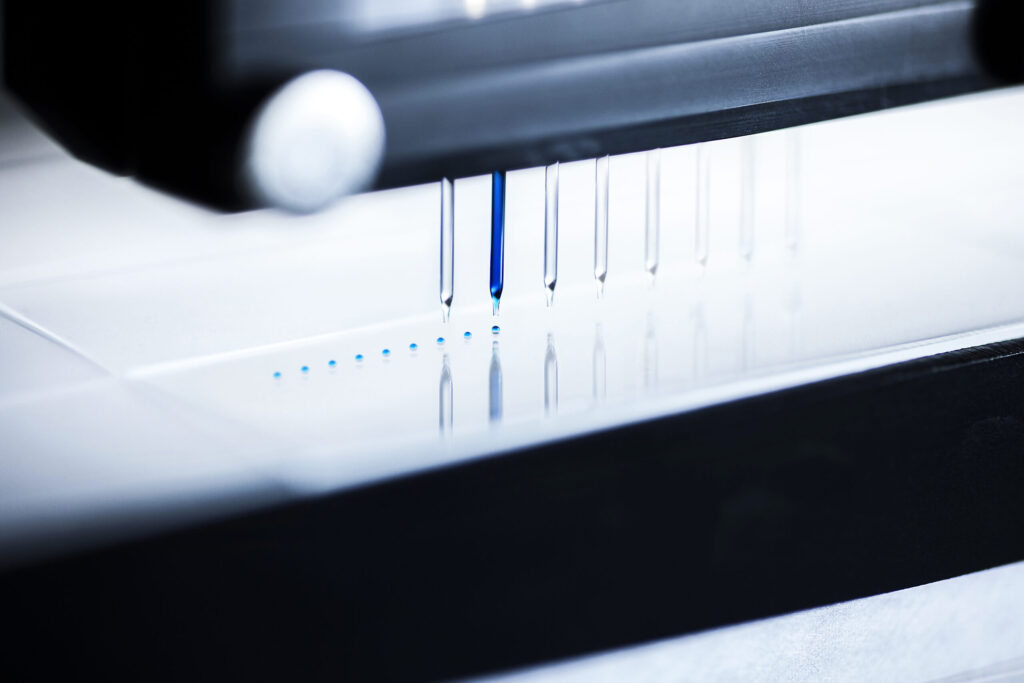
sciFLEXARRAYER Precision Microdispensers
Enabling miniaturized multiplex assays for diagnostics and life sciences
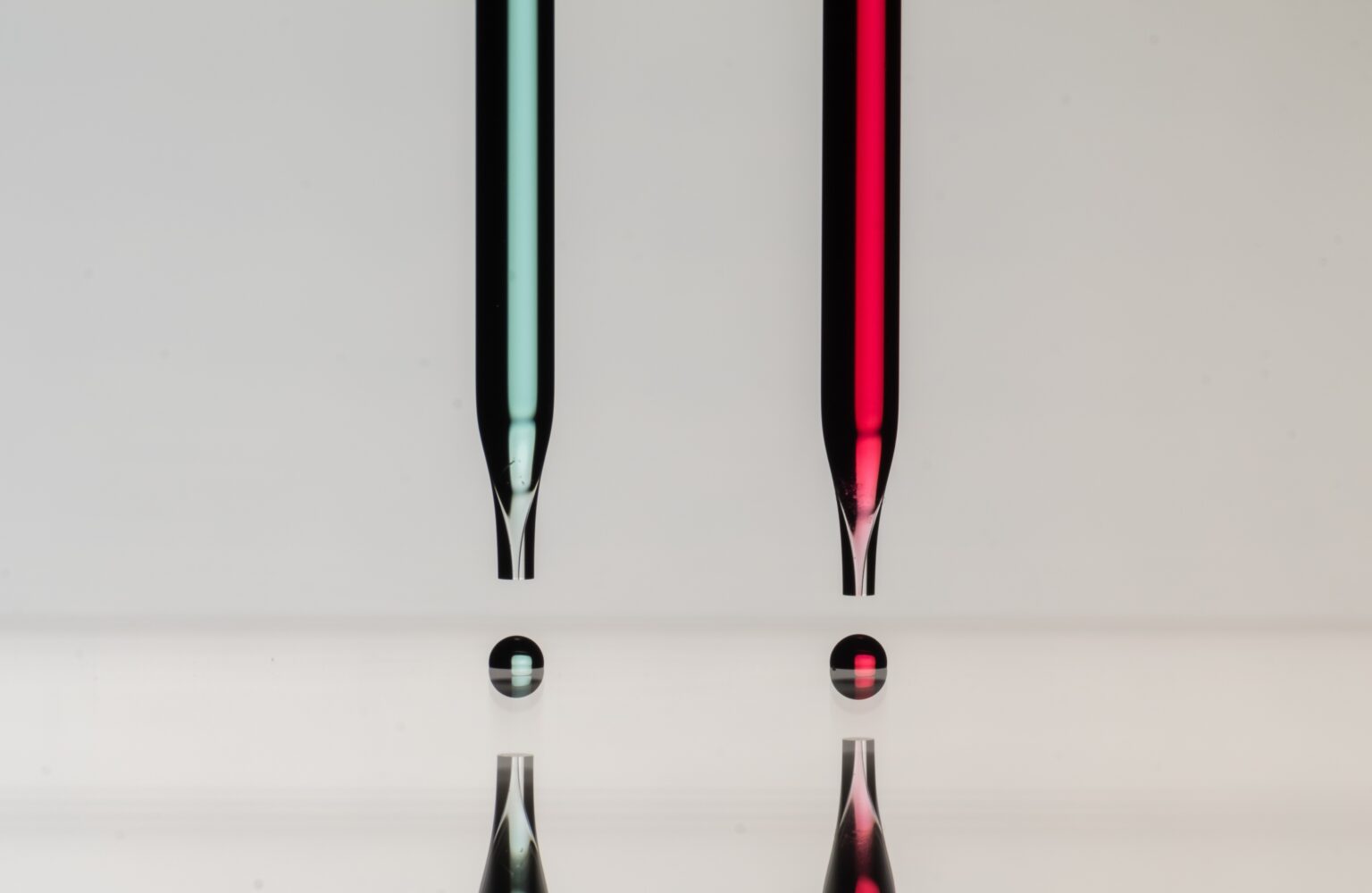

Non-contact liquid dispensing

Ultra-high position precision

Ultra-high volume accuracy

All liquids, including high viscosity

Highly customizable and scalable

Minimal dead volume
About sciFLEXARRAYER
sciFLEXARRAYER is a range of high-precision, non-contact dispensing systems designed for the accurate spotting of liquids from 10 pL to 5,000 nL.
Widely used in diagnostics and life sciences, these platforms enable the development and manufacturing of biochips, biosensors, and other analytical tools, delivering exceptional reproducibility with minimal sample waste.
Connect with an Expert
Trusted by leading institutions
Engineered for precision, endorsed by real-world results
sciFLEXARRAYER is a key tool on all of our projects, for depositing an enzyme onto the surface of an electrode, or most challenging we use it to deposit onto the surface of a microneedle array. Exactly the right volume, in exactly the right place.
Prof. Tony Cass
Department of Chemistry at Imperial College London
The main strength of the sciFLEXARRAYER is that it allows us to dispense sub-nanoliters amount of volume on our substrates, so we have reproducibility on the strips we prepare.
Dr. Nikolas Daskalakis
Scientific Consultant at BioNano Consulting
After a rigorous search for an automated liquid dispensing system with the precision needed to spot sample material onto the Maverick system’s 30-micron rings, I am pleased to announce this agreement with SCIENION,” said Cary Gunn, PhD, CEO of Genalyte. “The company’s dependable, ultra low volume dispensers allow for highly precise, contact-free drop spotting. We now can offer our customers a comprehensive validated automated system for multiplexed detection and analysis.
Cary Gunn
CEO of Genalyte
Miniaturization and automation are key to our immunoassay production and the sciFLEXARRAYER has proven itself to be a state-of-the-art Instrument for precise low volume liquid handling. We use it for developing new multiplex tests in microtiter plates to offer our customers cost effective tools for parallel analytics. First application examples are multiplex IVD tests for the detection of borrelia infections as borreliosis can become a severe disease if not diagnosed early.
Dr. Viktor Rûzicka
CEO of BioVendor
My research on magnetic nanotechnologies includes magnetic biochips, in vitro diagnostics, nanopatterning, and many other advanced technologies. Our sciFLEXARRAYER has proven to be an indispensable component of this research. Onsite service and support from SCIENION has been terrific.” Dr. Shan Wang, Director of the Stanford Center for Magnetic Nanotechnology and Professor of Materials Science & Engineering, Electrical Engineering and Radiology.
Dr. Shan Wang
Director of the Stanford Center for Magnetic Nanotechnology
I have used the sciFLEXARRAYER S3 printer to develop a variety of applications in glycan microarray. R&D and QC work are made easily with its user friendly GUI, and SCIENION’s special nozzle coatings. This allows us to robustly dispense samples containing carbohydrates, proteins, and small molecules. Their support is unparalleled.
Jian Zhang
Founder of Z Biotech
The SCIENION spotter provides the needed flexibility to address cantilever sensors of almost any size and design. This technique suits the need of high-throughput functionalization of arrays of nano-mechanical systems as the inkjet head does not contact the surface of the fragile devices.
Dr. Montserrat Calleja
Head of Microelectronics Institute of Madrid
“We use a tiny chip and the sensors on this chip need to be spotted precisely. SCIENION provides the visualization and the software to recognize the orientation and position of the chip and enables us to precisely spot on every single sensor in an efficient and cost-effective way. SCIENION has been a great partner and helped us all along the way for setting up precision loading of our chips and designing a software that uniquely supports our system.”
Martin Gleeson
CSO of Genalyte Inc.
“We have been using SCIENION manufacturing printing services to produce our CLART® product line. CLART® is a low density well-based microarray platform for clinical use that allows the detection of multiple targets in a single test. This technology, jointly developed between SCIENION and GENOMICA, has enabled us to meet high quality standards and a flexible production schedule.”
Dr. María Luisa Villahermosa
R&D Director
“Protein multiplexing is our speciality, we utilise SCIENION printers to print our assays, spotting very small amount of liquid on surface is one of the things SCIENION does. But SCIENION is also very valuable to us on creating an ecosystem in the multiplexing world. Their technology particularly is very useful for spotting on irregular surfaces, so it doesn´t need to be on flat surfaces, it can be on different types or shapes.”
Shawn Guse
CEO Intuitive Biosciences






Product range

S3
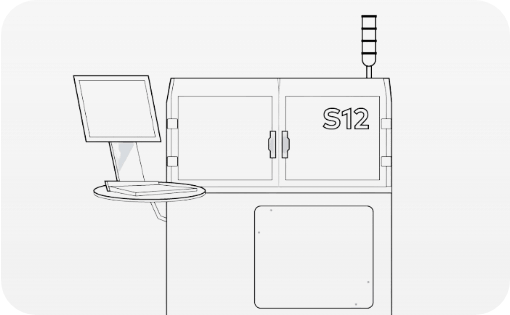
S12
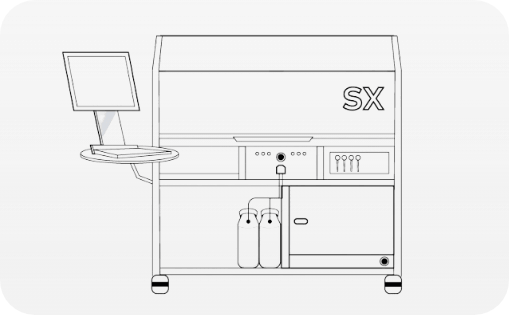
SX
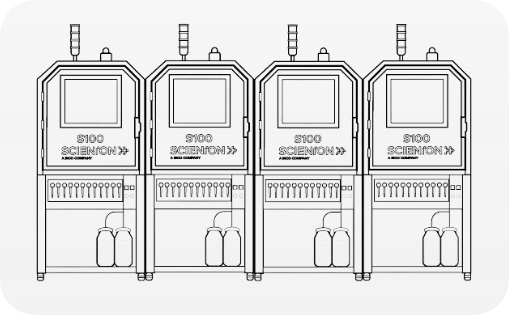
S100
Let's discuss your needs
Share a few details about your application or development needs. We’ll follow up with guidance on the right technologies, workflows, and project pathways for your lab.